

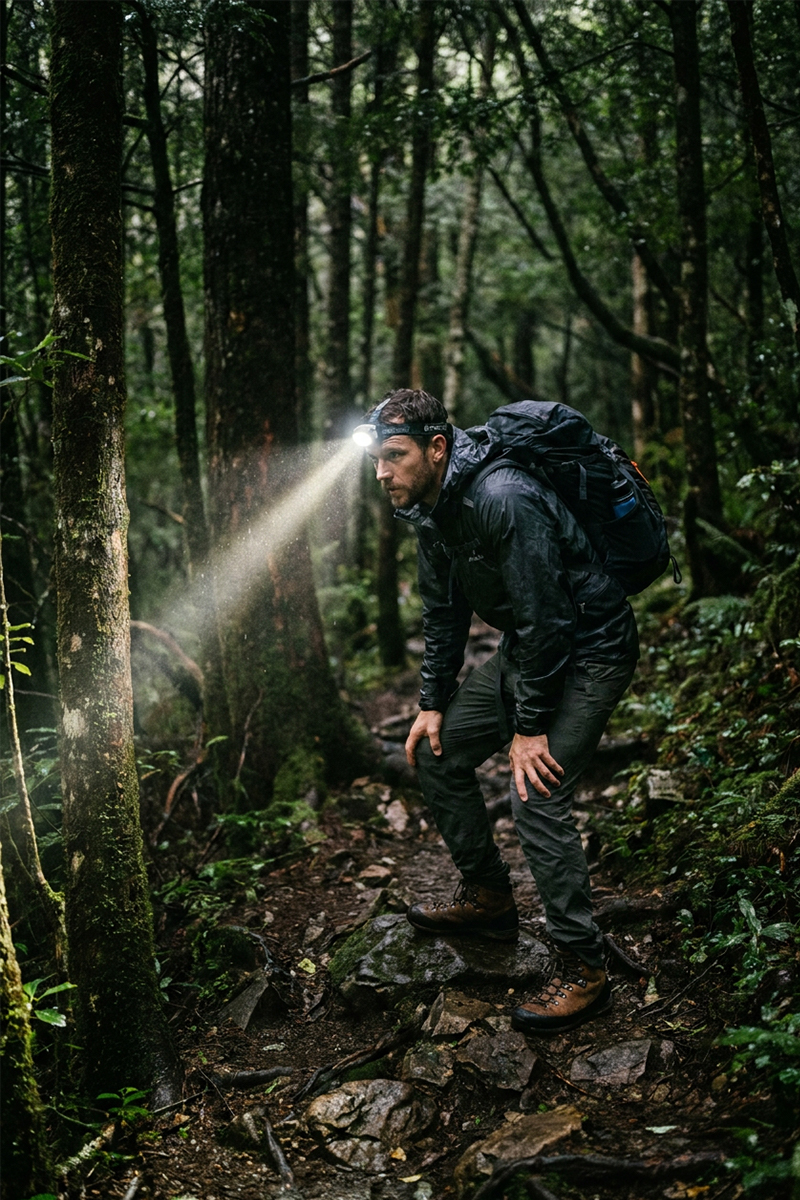
For outdoor enthusiasts, light is an invisible companion on the adventure trail. Whether it’s night hiking, campsite duty, cave exploration, or early-morning trail running, a reliable lighting tool is indispensable. When it comes to outdoor lighting, the two most common choices are headlamps and flashlights. They may seem similar in function, but each has its own unique advantages and is suitable for different scenarios. Today, we’ll break down their benefits and applicable environments to help you make the best choice for your outdoor adventures.
Let’s start with headlamps, the "hands-free savior" for outdoor lovers. Their core advantage lies in being completely hands-free, which is the key difference from flashlights. Worn directly on the head, headlamps move synchronously with your line of sight, allowing you to keep your hands free for other tasks—this is especially valuable in outdoor activities that require manual operation.
For example, when hiking, you can hold trekking poles and carry a backpack while the headlamp illuminates the path ahead; when camping, you can use both hands to set up tents, prepare food, or organize gear without having to hold a light source. In more specialized activities like cave exploration or rock climbing, where balance and coordination are crucial, headlamps eliminate the inconvenience of holding a flashlight, letting you focus fully on the task at hand.
In addition to freeing up your hands, headlamps provide stable and focused lighting. Their light coverage aligns with your line of sight, ensuring you can clearly see the path, obstacles, or details you need to attend to. Most outdoor headlamps are lightweight and comfortable to wear, with long battery life, and many offer adjustable brightness and light modes (such as low light for energy saving and high light for long-distance visibility). They are ideal for scenarios that require hands-on operation, including hiking, camping, rock climbing, cave exploration, and night running. They also work well for long-term outdoor stays, such as overnight camping or guard duty, where consistent lighting is needed.
Next, let’s talk about flashlights, which stand out for their flexibility and versatility. Unlike headlamps, flashlights are held by hand, allowing you to freely adjust the lighting angle and range. This makes them perfect for scenarios where you need precise control over the light direction.
For instance, when searching for lost items in the wild, you can use a flashlight to focus on specific areas; when encountering wild animals, a strong beam can act as a deterrent; when patrolling a campsite, you can sweep the light over a large area to check for potential hazards. Flashlights also excel in long-distance lighting—they can illuminate distant paths, terrain, or landmarks, making them ideal for pathfinding and search-and-rescue missions.
Most professional outdoor flashlights are designed to be waterproof and shockproof, able to withstand harsh outdoor conditions such as rain, mud, and accidental drops. They also have longer battery life compared to many headlamps, making them a reliable backup. Flashlights are best suited for scenarios where hands-free operation isn’t necessary, such as search and rescue, long-distance pathfinding, checking distant terrain, or as a backup light source if your headlamp runs out of power.
To sum up, headlamps and flashlights each have their own strengths: headlamps prioritize hands-free convenience, making them perfect for activities that require manual operation and long-term lighting; flashlights offer flexibility and long-distance illumination, ideal for precise lighting and backup use. They are not opposites but complements—many outdoor enthusiasts carry both: a headlamp for daily use and a flashlight for specialized needs or emergencies.
A final tip: When choosing outdoor lighting, opt for professional models that are waterproof, shockproof, and have long battery life. Always check the battery before your trip and bring a backup power source if needed. With the right lighting tool, you can explore the outdoors safely and confidently, no matter the time of day or night.